
The Europe Dark Kitchens Ghost Kitchens Cloud Kitchens Market is gaining importance as restaurants, food brands, and delivery platforms adapt to changing consumer expectations around convenience, digital ordering, and flexible foodservice operations. Unlike traditional restaurants, dark kitchens focus on preparing food for delivery without maintaining a conventional dine-in area. This model allows operators to concentrate resources on food preparation, order management, and delivery fulfillment.
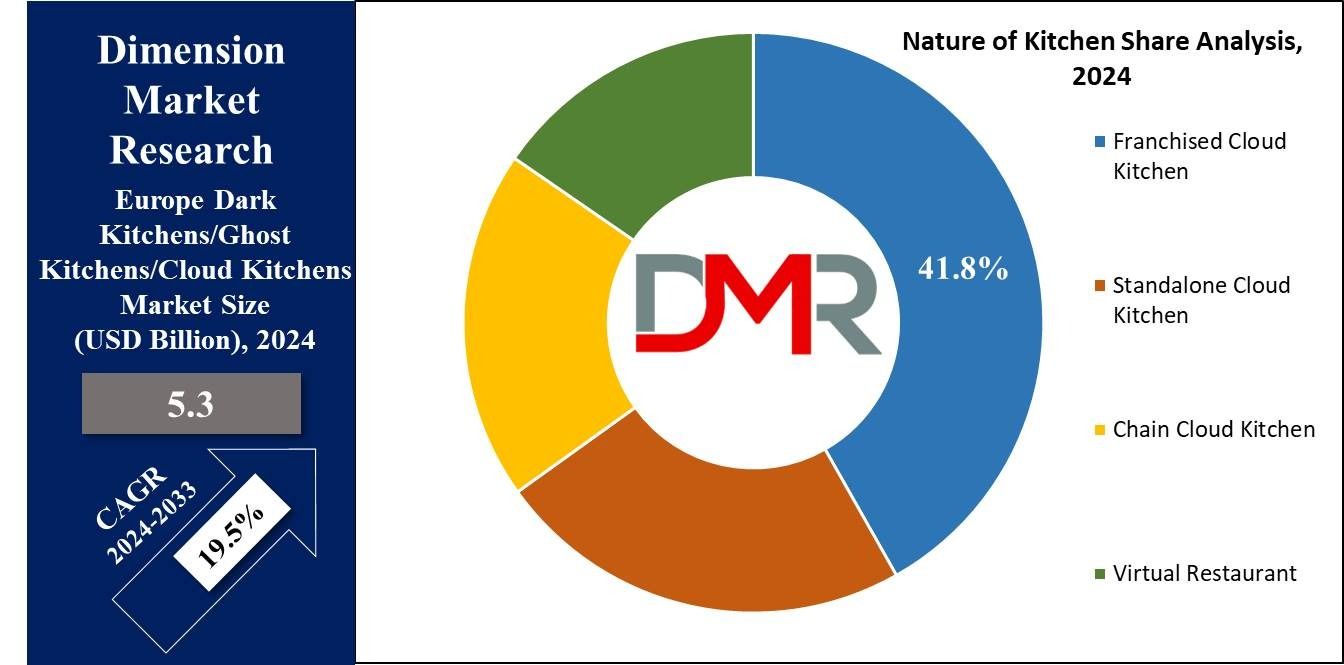
According to Dimension Market Research, the Europe Dark Kitchens/Ghost Kitchens/Cloud Kitchens Market is estimated at USD 5.3 billion in 2024 and is projected to reach USD 26.2 billion by 2033, expanding at a reported compound annual growth rate (CAGR) of 19.5%. The report identifies the growth of online food delivery, lower entry barriers compared with traditional restaurant formats, and demand for scalable kitchen infrastructure as important market drivers.
This expansion reflects a broader change in how food businesses approach location, operations, and customer access. Instead of investing exclusively in prominent dining locations, operators can use delivery-focused kitchens to serve selected neighborhoods, test virtual restaurant concepts, and expand production capacity. The opportunity, however, depends on operational efficiency, delivery economics, food quality, and the ability to compete in an increasingly crowded digital marketplace.
What Is the Europe Dark Kitchens/Ghost Kitchens/Cloud Kitchens Market?
The Europe Dark Kitchens/Ghost Kitchens/Cloud Kitchens Market covers commercial kitchen facilities designed primarily for preparing food for delivery. These facilities may operate independently, support multiple restaurant brands, or provide infrastructure and services to established food businesses.
The business model separates food production from the traditional restaurant experience. Customers order through online platforms or digital channels, while kitchen teams concentrate on preparation, packaging, and timely fulfillment. Operators can also manage multiple virtual brands from one facility, enabling them to test different menus without opening separate dine-in restaurants.
The market encompasses several business models, including fully equipped kitchens, semi-equipped kitchens, bring-your-own-kitchen arrangements, kitchen-as-a-service offerings, and order management and delivery services. Its broader structure includes independent cloud kitchens, shared kitchens, kitchen pods, incubator kitchens, franchised operations, standalone kitchens, chain kitchens, and virtual restaurants.
Why Is the Europe Dark Kitchens/Ghost Kitchens/Cloud Kitchens Market Growing?
Online food delivery is a central growth driver. Consumers increasingly value the ability to order meals digitally and receive them at home or work. For restaurant operators, delivery-focused infrastructure offers a way to respond to this demand without reproducing the full cost structure of a conventional restaurant.
Another important factor is operating flexibility. Fully equipped kitchens can help businesses enter the market without independently sourcing every piece of equipment or developing kitchen infrastructure from scratch. Shared facilities and kitchen-as-a-service models can also support businesses seeking to test demand before committing to larger investments.
Digital platforms contribute to this shift by connecting consumers, restaurants, and delivery services. Order management, menu optimization, inventory planning, and delivery coordination can help operators manage demand more effectively. However, the commercial benefits depend on execution. High urban property costs, competition, food safety requirements, and the expenses associated with delivery operations can put pressure on profitability.
Key Market Statistics
● 2024 market size: USD 5.3 billion.
● 2033 forecast value: USD 26.2 billion.
● Reported CAGR: 19.5%.
● Forecast period: 2024 to 2033.
● Business model expected to lead: Fully equipped kitchens.
● Type highlighted in the report: Independent cloud kitchens.
● Offering expected to lead: Food delivery.
● Nature of kitchen expected to lead: Franchised cloud kitchens.
These figures and segment expectations are based on the primary DMR report. A separate leading-region market share is not included here because the report page does not provide a verified percentage for regional leadership.
Get a Free Sample of the Europe Dark Kitchens/Ghost Kitchens/Cloud Kitchens Market Report
Explore the full research coverage to understand market segmentation, business models, competitive positioning, regional developments, and the factors influencing future demand.
Market Segmentation and Emerging Business Models
Business model selection is an important factor in determining how operators enter and scale within the market. Fully equipped kitchens are expected to lead the business model segment, offering ready-to-use cooking equipment, storage, and sanitation infrastructure. This arrangement can reduce setup complexity and help businesses begin operations more quickly.
Independent cloud kitchens are also highlighted as an important market category. They provide restaurant entrepreneurs and established brands with dedicated production facilities and the flexibility to develop menus, test new concepts, and expand delivery coverage. Shared kitchens and kitchen pods offer alternative approaches for businesses that require different levels of infrastructure and operational support.
By offering, food delivery is expected to remain a major component of the market. Order management, food preparation, marketing, data analytics, packaging, and inventory management also contribute to the wider service ecosystem. By kitchen type or operating structure, franchised cloud kitchens are expected to play an important role, supported by established business models, brand recognition, and standardized processes.
Regional Outlook and Competitive Landscape
The DMR report identifies the United Kingdom, Germany, France, and Spain among the European countries expected to play important roles in the market's development. The expansion of online ordering, urban lifestyles, and demand for convenient meal options supports the adoption of delivery-focused foodservice models across these markets.
Competition involves independent kitchen operators, franchised businesses, virtual restaurant brands, and delivery platforms. Prominent names identified on the report page include Uber Eats, Kitopi, Deliveroo, Kitchen United, Kitchen Hub, REEF Technology, DoorDash, and Karma Kitchen. These companies represent different parts of the ecosystem, from delivery platforms to kitchen infrastructure and operating models.
For market participants, competitive differentiation increasingly depends on the ability to control operating costs, maintain food consistency, coordinate delivery, and respond to local customer preferences. Technology-enabled order management and data analysis can help operators understand demand patterns and allocate kitchen resources more efficiently. However, expansion alone does not guarantee profitability, particularly where real estate, labor, compliance, and platform-related costs remain significant.
Challenges and Future Growth Opportunities
The market's long-term potential is accompanied by operational challenges. Urban property expenses can erode the cost advantages of delivery-only kitchens, while competition among restaurants and virtual brands may place pressure on pricing. Operators must also comply with applicable food safety, hygiene, and business regulations.
Future opportunities include multi-brand kitchen operations, franchised expansion, flexible kitchen infrastructure, and improved use of order and inventory data. Businesses that balance expansion with reliable food quality, efficient fulfillment, and disciplined cost management may be better positioned to benefit from rising demand for digital food ordering.
Explore the Complete Europe Dark Kitchens/Ghost Kitchens/Cloud Kitchens Market Analysis
Access the full DMR report for a deeper assessment of market forecasts, business models, segment developments, regional coverage, and competitive dynamics to support market research and strategic planning.
Frequently Asked Questions
1. What is the market size of the Europe Dark Kitchens/Ghost Kitchens/Cloud Kitchens Market?
The market is estimated to reach USD 5.3 billion in 2024, according to Dimension Market Research.
2. What is the projected CAGR of the Europe Dark Kitchens/Ghost Kitchens/Cloud Kitchens Market?
The report states a CAGR of 19.5%. Its overview projects market growth from 2024 through 2033.
3. Which business model is expected to lead the market?
Fully equipped kitchens are expected to lead the business model segment over the forecast period.
4. Which European countries are important to market development?
The report highlights the United Kingdom, Germany, France, and Spain as important markets for dark kitchen development. It does not provide a verified leading-country market share on the report page.
5. What is the future outlook for the Europe Dark Kitchens/Ghost Kitchens/Cloud Kitchens Market?
The report projects the market to reach USD 26.2 billion by 2033. Online food delivery, flexible kitchen infrastructure, and scalable restaurant business models are among the key growth drivers identified.
Conclusion
The Europe Dark Kitchens/Ghost Kitchens/Cloud Kitchens Market is positioned for substantial expansion as foodservice businesses adapt to digital ordering and delivery-oriented consumer behavior. Fully equipped kitchens, independent operators, food delivery services, and franchised models are important elements of the market's development. Although operating costs, competition, and regulatory requirements remain challenges, flexible infrastructure and technology-enabled operations create opportunities for businesses seeking to scale efficiently. The ability to combine convenience with consistent food quality and sustainable unit economics will remain central to long-term success.
Related Cloud and Digital Infrastructure Market Insights
Autonomous Cloud Management Market Size
The global Autonomous Cloud Management Market is projected to grow from USD 8.2 billion in 2026 to USD 32.6 billion by 2035, at a CAGR of 16.6%. Its focus on AI-driven automation, resource optimization, and operational efficiency offers a complementary perspective on how technology can improve business operations across industries.
Canada Personal Cloud Market Share
The Canada Personal Cloud Market is estimated at USD 1.1 billion in 2026 and is forecast to reach USD 4.1 billion by 2035, growing at a CAGR of 15.6%. The report identifies cloud storage software and platforms as the leading offering, reflecting demand for personal data storage, synchronization, and backup services.
China Personal Cloud Market Growth
The China Personal Cloud Market is projected to expand from USD 7.6 billion in 2026 to USD 26.5 billion by 2035, at a CAGR of 14.9%. Cloud storage and file hosting are identified as the leading offering, highlighting the growing importance of digital storage and personal data management services.